Buying near the beach in Indialantic is exciting, but the insurance line on your monthly budget can feel confusing. You want the right protection without overspending, and you also want to avoid surprises after a storm. In this guide, you will learn what a standard homeowners policy does and does not cover in coastal Brevard County, how wind mitigation credits work, and how hurricane deductibles affect your cash plan. You will also get a simple checklist to gather the right documents and estimate your total monthly housing cost. Let’s dive in.
What a Florida homeowners policy covers
A typical homeowners policy in Florida covers your dwelling, other structures, personal property, liability, and additional living expenses for covered perils. Many policies in coastal areas include special hurricane or windstorm provisions, which can change how deductibles apply. Always review the declarations page to see your specific limits, deductibles, and endorsements.
Flood is usually excluded from a standard homeowners policy. If a home is in a Special Flood Hazard Area, a lender that is federally regulated will require flood insurance. East of the causeway, many properties sit in higher-risk flood zones, so it is smart to check FEMA Flood Insurance Rate Maps and any available elevation certificate to confirm your flood zone and possible requirements.
Insurance costs near the coast are generally higher than inland areas due to hurricane risk, storm surge, and wind and water exposure. Availability and pricing can vary by insurer and exact location. Plan your budget with a higher baseline for premiums and confirm flood exposure separately.
Coastal factors that drive your premium
Distance to open water and surge exposure
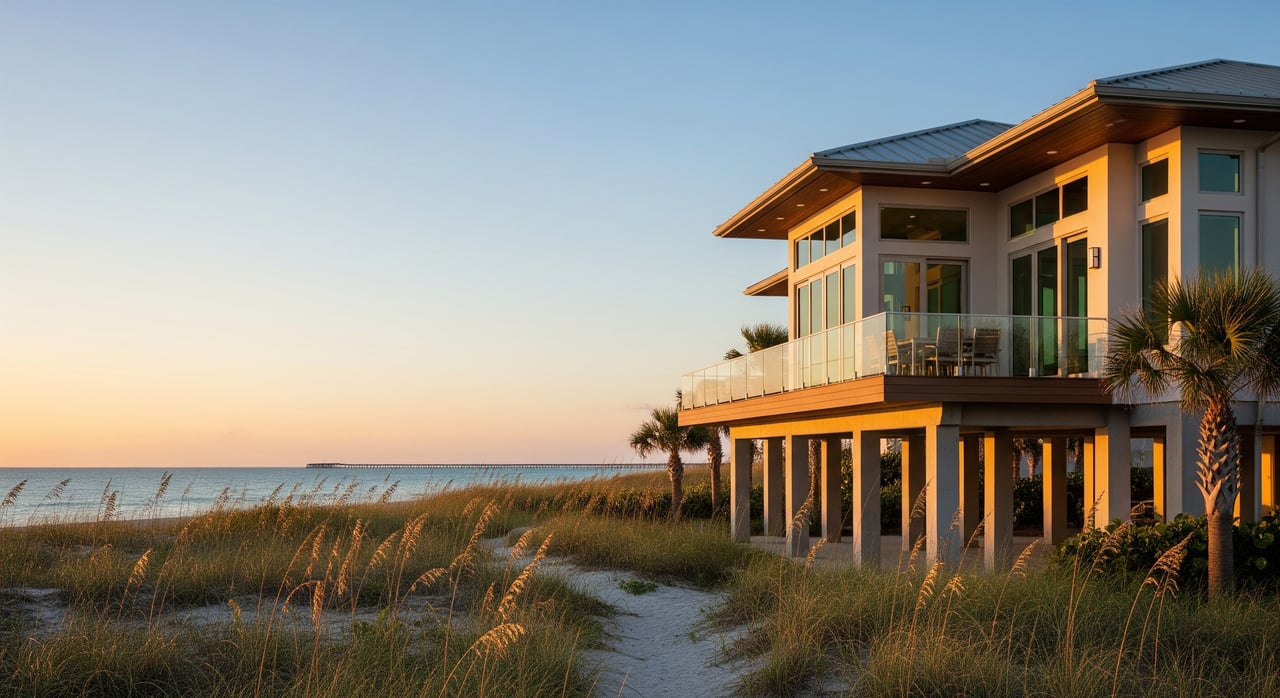
The closer a home is to open water, the greater the expected wind and storm-surge impact. Insurers consider local surge models and flood zones when pricing or approving coverage. Even homes on the same street can be priced differently based on micro-location.
Elevation and finished floor height
Elevation certificates matter. Finished floor height above base flood elevation can reduce flood premiums and risk. Higher elevation can help your overall insurance profile.
Construction type and roof integrity
Concrete block and reinforced masonry often earn better wind ratings than wood-frame structures. Roof age, roof-cover type, and how the roof deck is attached are key factors. An older roof or weak roof deck attachment can push premiums higher or trigger repair requirements.
Opening protection
Impact-rated windows and doors or certified shutters can reduce the chance of interior damage in a windstorm. These features often qualify for wind mitigation credits when properly documented.
Building code and condition
Homes built or retrofitted to recent Florida Building Code standards typically score better with underwriters. A clean claims history and well-documented maintenance usually help with pricing and availability.
Access to emergency services
Proximity to fire hydrants and fire stations is part of many rating models. While you cannot move the house, you can strengthen other risk factors to improve your overall profile.
Wind mitigation credits you can earn
Wind mitigation credits are discounts insurers apply for features that reduce wind damage. To receive credits, insurers typically require a wind mitigation inspection and standardized documentation.
Common features that may earn credits include:
- Opening protection such as impact glass or certified shutters
- Roof-to-wall connections like clips or straps
- Roof deck attachment methods with stronger nail patterns
- Newer, durable roof coverings and proper installation
- Secondary water resistance under the roof covering
- Gable end bracing and continuous load paths
Inspections are performed by licensed professionals using Florida-standard forms. Keep records such as inspection reports, roofing permits, contractor invoices, and product approvals for impact windows or shutters. Savings vary by carrier and the combination of features, but the discounts can be meaningful when stacked with other favorable factors.
Deductibles and your cash plan
Most coastal Florida policies have two deductibles. The all-perils deductible is a flat dollar amount that applies to non-wind losses. The hurricane or windstorm deductible often appears as a percentage of your dwelling Coverage A limit and applies only to covered wind or hurricane events.
Typical hurricane deductible options range from about 1% to 5%, with some policies offering higher percentages for lower premiums. For example, on a home insured for $500,000, a 2% hurricane deductible equals $10,000 and a 5% deductible equals $25,000. This example shows why your deductible choice is a big part of your cash plan.
Raising deductibles usually lowers your annual premium, but it increases your out-of-pocket costs after a storm. To budget for coastal homeownership, plan for:
- Your annual homeowners premium divided by 12
- Your flood insurance premium divided by 12, if required or advisable
- An emergency savings buffer equal to your hurricane deductible
Also review how your policy applies deductibles when losses combine, such as wind-driven rain with flood. The declarations page will outline these details.
Buyer checklist before you close
Gathering the right documents helps you shop policies, confirm risks, and qualify for credits.
Request these items from the seller or listing side:
- Homeowners declarations page with coverages, limits, deductibles, and endorsements
- Loss runs or claims history for the property
- Wind mitigation inspection report and any improvement permits
- Roofing permit and contractor invoice for any roof replacement
- Elevation certificate if available, FEMA flood zone determination, and any past flood claims
- Survey and recent inspections if available
Follow these budgeting steps:
- Get quotes from at least two coastal-savvy insurers or a local independent agent
- Add an NFIP or private flood quote if the home is in a flood zone or near the coast
- Choose a hurricane deductible and set a matching cash reserve
- Price out planned retrofits, ask insurers for expected credits, and compare to the cost
- Schedule any required inspections and submit documentation promptly
Local tips for Indialantic and Melbourne Beach
Homes east of the causeway often face higher flood and wind exposure, so premiums can be higher and some carriers may restrict coverage. Elevation, roof age, and documented opening protection can make a visible difference in quotes. Replacement of older roofs and adding impact protection are common upgrades that help reduce risk and improve insurability.
Florida’s market has seen rate changes and carrier exits in recent years. If a private carrier declines, a local independent agent can help you compare admitted carriers, surplus lines options, and the state-backed residual market when eligible. The goal is to pair the right coverage with a realistic budget and a plan to improve the home’s risk profile over time.
Ready for next steps?
If you are weighing a coastal purchase in Indialantic or nearby Melbourne Beach, a little preparation goes a long way. Confirm the flood zone and elevation, get multiple quotes, document wind mitigation features, and choose deductibles that match your savings plan. When you are ready to tour homes or want local guidance on how insurance fits your monthly numbers, reach out to Jeremy Stewart for clear next steps and a steady advocate.
FAQs
Does a homeowners policy cover storm surge in Indialantic?
- No. Flood, including storm surge, is generally excluded from standard homeowners policies. A separate NFIP or private flood policy is needed when coverage is required or recommended.
How do wind mitigation credits lower premiums near the beach?
- Credits apply when documented features like impact windows, roof straps, and strong roof deck attachment reduce wind risk. An inspection and proper records are usually required.
What hurricane deductible should I choose for a coastal home?
- Pick a percentage you can cover in cash after a storm. Higher deductibles can lower premiums but raise your out-of-pocket exposure, so match the choice to your savings plan.
Will being east of the causeway make a home uninsurable?
- Not necessarily. Some carriers limit coastal exposure or charge more, but options exist across private insurers, surplus lines, and the residual market when eligible.
How can I check a property’s flood zone before I buy?
- Review FEMA Flood Insurance Rate Maps and ask for any elevation certificate on file. Your agent can also help you request flood determinations and quotes for planning.