The impact on nearby homes from Port Canaveral's cargo expansion depends on the exact street, the type of cargo facility closest to it, and your route to work, not simply on distance to the port. The port announced new container service, a lease expansion at North Cargo Berth 6, and a berth modernization project in 2026, but no published source ties those plans to a measured price change in Cape Canaveral, Cocoa Beach, Cocoa, or Merritt Island. Treat the expansion as a property-by-property question you can research, not a neighborhood-wide verdict.
Key Takeaways
- Port Canaveral reported cargo volume above 6 million tons in fiscal year 2026, and petroleum products account for more than half of its annual cargo tonnage, so tankers matter as much as containers.
- The September 2026 GT USA lease adds 10 acres beside an existing 20-acre footprint at North Cargo Berth 6 and can run up to 25 years.
- Construction on the North Cargo Berths 1 and 2 modernization is estimated to begin in early 2027, with substantial completion about 16 months later.
- Cape Canaveral sits closest to the port's operating area, while Cocoa and Merritt Island are better understood as employment-access locations than cargo-adjacent ones.
- No verified source quantifies truck trips, new local jobs, or a cargo-related price premium or discount for any Brevard neighborhood, so any claim that does is guesswork.
What Is Port Canaveral Building, and What Does It Mean for the Impact on Nearby Homes?
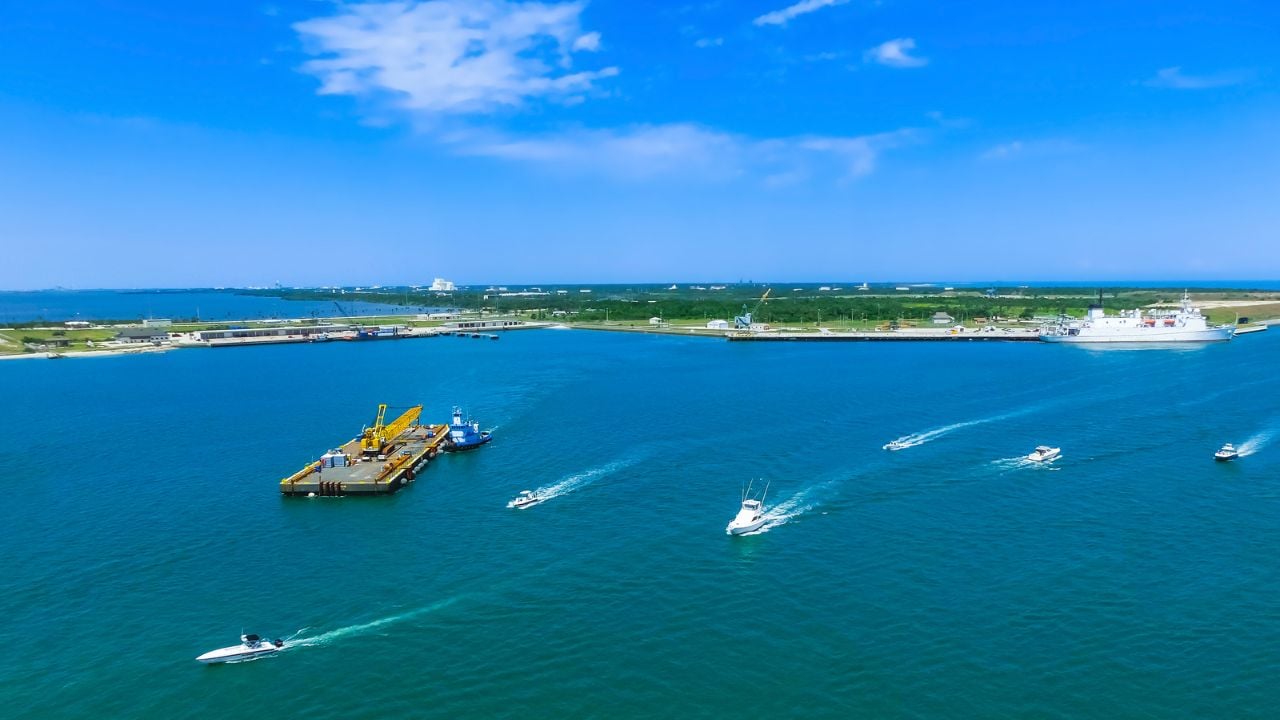
The port is adding capacity across three different cargo types: containers, breakbulk and general cargo, and petroleum. Each one affects the surrounding area differently, so "near the port" isn't a useful description on its own.
According to Port Canaveral's July 2026 announcement, cargo volume exceeded 6 million tons in fiscal year 2026, with roughly $25 million in operating revenue from cargo operations. That's a port-reported figure, not an independent estimate of regional economic impact. It tells you the port is growing, not what that growth does to a specific block.
Here's what has actually been announced:
Project | What's Planned | Timing | Cargo Type |
|---|---|---|---|
GT USA lease at North Cargo Berth 6 | 10 added acres beside a 20-acre operation, plus at least 15 hurricane-resistant warehouses totaling nearly 170,000 square feet | Announced September 2026, up to 25 years, effective immediately | Breakbulk and general cargo, including lumber, steel, and project cargo |
International container service | A call every two months, each projected at 80 to 120 import containers from Mexico | Announced July 2026 | Electronics, refrigerated cargo, fresh produce, and other food products |
North Cargo Berths 1 and 2 modernization | A $37.43 million project supported by a $20.21 million federal grant | Construction estimated to begin early 2027, about 16 months to substantial completion | Tanker vessels carrying refined petroleum products |
The details come from the port's own releases on the GT USA lease and the federal grant for the berth project. The same grant announcement describes a nearly $1 billion capital-improvement program over five years, covering berths, harbor work, landside infrastructure, cruise terminals, and roadway upgrades. It doesn't say every one of those projects will touch residential traffic or property demand in the same way, and I wouldn't assume they will.
What the warehouses do and don't tell you
Nearly 170,000 square feet of warehouse space sounds like a lot of activity. But the lease announcement doesn't state a completion date, staffing level, truck-trip estimate, or operating-hours schedule. Don't back into those numbers from square footage. If a listing, a neighbor, or an online post gives you a confident truck count, ask where it came from.
Will Cargo Growth Change Jobs, Commutes, and Truck Traffic for Cocoa, Merritt Island, Cape Canaveral, and Cocoa Beach?
It may, but no verified source quantifies new local jobs, commute changes, or truck volumes by community, so the honest answer is "possibly, and it depends on your address." What you can do is understand how each community relates to the port and match that to how you'll use the home.
Jobs and employment access
The port's cargo facilities page names its access to the Central Florida I-4 corridor and nearby distribution and manufacturing shippers as strategic advantages. That supports a logistics and employment-access argument for the wider Space Coast. It does not give a job count for any city. Converting tonnage, warehouse area, or capital spending directly into a number of jobs is how bad forecasts get made.
If port-related work is part of why you're looking, I'd treat it as one factor among several. The broader employment picture here also includes launch and aerospace, which I cover in how KSC and SpaceX launches affect Brevard real estate.
Truck routes and commute patterns
Cocoa and Merritt Island are employment-access locations rather than port-terminal neighborhoods. You can reach the port through the regional road network while living farther from the cargo berths than someone in Cape Canaveral. I can't give you a verified commute-time comparison, because it depends on route and time of day, and it shouldn't be quoted without route-specific traffic data.
Which roads carry the most port-related truck traffic is the same story: the port's announcements don't publish route-level counts. For a specific home, check the port's access roads against the street you're considering, then ask the city or the state transportation agency about planned roadway work.
Noise and exposure by community
- Cape Canaveral is the community most directly adjacent to the port's operating area. Separate cruise facilities, cargo berths, petroleum operations, port access roads, and ordinary residential streets in your evaluation. They're very different things.
- Cocoa Beach is close to the port but separated from the main cargo-terminal area by the port and its access network. No source I've seen verifies a citywide cargo-related premium or discount, so your street, your route to work, and whether you value beach proximity or separation from industrial activity matter more. If beach living is the draw, my breakdown of Space Coast beach communities worth buying into is a useful companion.
- Cocoa and Merritt Island sit farther from the cargo berths. Their relationship to the port is mostly about access and commute, not day-to-day exposure.
What Should Buyers and Sellers Check Before Deciding Near the Port?
Check the specific facility, the project timeline, and your daily route before you let the port influence what you offer or what you ask. That keeps the impact on nearby homes in perspective: it's a set of property-level facts, not a headline.
A buyer's screening checklist
- Identify the nearest cargo facility. Container, breakbulk, and petroleum operations involve different vehicles, schedules, and storage needs.
- Look at the port's public project information. The berth modernization is still on a timeline that starts in early 2027, and the port described it as in design and engineering stage at its May 2026 announcement. Construction traffic, noise, and access effects are project-specific possibilities, not established neighborhood-wide impacts.
- Drive your real commute at your real hours. A map estimate isn't a substitute, especially if your work is on the other side of the port from your home.
- Ask the city about planned roadway or industrial projects near the street you're considering.
- Decide what you want. Some buyers want the shortest path to port, marine, or logistics work. Others want the opposite, a home with real distance from industrial activity. Neither is wrong, but they point to different addresses.
If you're selling
Buyers near the port will ask what the expansion means, and the best answer is a factual one. Know which facility is closest to your street, what the port has publicly announced, and what hasn't been announced. Overselling a "port boom" or dismissing buyer concerns both cost you credibility. I'd rather you price from actual comparable sales on your street than from a story about the port.
What the market data can and can't tell you
For context on how quickly Central Brevard is moving, recent local market data for Viera shows a median sale price of $569,000 for homes sold over the last 90 days, with a median of 15 days from listing to going under contract. Viera isn't a port-adjacent market, and an individual home's value depends on its condition, street, build year, and timing. Price and pace for Cape Canaveral, Cocoa Beach, Cocoa, and Merritt Island need their own street-level comparisons, and that's exactly the kind of analysis I run with buyers and sellers before they commit.
If you're coming from out of the area, my list of what Space Coast relocation buyers should check first pairs well with the port checklist above.
FAQ
Will Port Canaveral cargo expansion create more jobs for people living in Cocoa, Merritt Island, Cape Canaveral, or Cocoa Beach?
Possibly, but no verified forecast gives a number of new jobs for any of those communities. The 2026 announcements show added cargo capacity and investment, which can support logistics and marine employment, but job counts shouldn't be inferred from tonnage or warehouse size.
Which roads carry the most port-related truck traffic near Port Canaveral?
There's no published route-level truck count in the port's announcements, so I wouldn't name a road as the main one. For a specific home, compare it against the port's access roads and ask the city or state transportation agency about traffic data and planned roadway work.
Are homes in Cape Canaveral or Cocoa Beach more exposed to port noise or industrial activity?
Cape Canaveral is the community most directly adjacent to the port's operating area, so exposure there is more likely, but it varies by street and by which facility is closest. Cocoa Beach is close geographically but separated from the main cargo-terminal area by the port's access network. Check the exact address instead of relying on the city name.
Could new port warehouses and cargo terminals increase demand for nearby homes?
They could, particularly for buyers who want proximity to logistics and marine work, but no verified source shows a cargo-related price premium or discount. Demand also depends on factors that can pull the other way, such as buyers who prefer distance from industrial activity.
What should buyers ask about planned port, roadway, or industrial projects before purchasing near Port Canaveral?
Ask which facility is closest to the home, what the port has announced for it, and what the construction timeline looks like. Then ask the city about roadway projects near your street. The berth modernization, for example, is estimated to start in early 2027 and run about 16 months.
Next Step
The impact on nearby homes from Port Canaveral's growth is something you can evaluate with facts, but only one address at a time. If you're buying or selling in Cape Canaveral, Cocoa Beach, Cocoa, or Merritt Island, I'll walk you through the facility closest to your street, the project timelines, and the local comparable sales so your decision rests on property-level information. Call or text me at (321) 626-5821 to schedule a consultation.
Consent: I agree to be contacted by Jeremy Stewart via call, email, and text for real estate services. Message and data rates may apply.